LEND A HAND
  • Home
    • Spotted!
    • MNS Tapir Campaign
  • Wildlife Warrior
    • #MNSwildlifewarrior
  • forest friend
    • #MNSForestFriend
    • UCF Network
  • Ocean Buddy
    • Paddle for Nature
  • 3R Rebel
  • Clean-up Champion
  • Nature Educator
    • KPA LAH
    • WildFriends
  • Eco Explorer
  • News
    • Malaysian Naturalist
    • MEDIA
  • Contact
  • Home
    • Spotted!
    • MNS Tapir Campaign
  • Wildlife Warrior
    • #MNSwildlifewarrior
  • forest friend
    • #MNSForestFriend
    • UCF Network
  • Ocean Buddy
    • Paddle for Nature
  • 3R Rebel
  • Clean-up Champion
  • Nature Educator
    • KPA LAH
    • WildFriends
  • Eco Explorer
  • News
    • Malaysian Naturalist
    • MEDIA
  • Contact
LEND A HAND

On the trail of a sun bear

12/5/2017

0 Comments


malaysian naturalist, march 2017

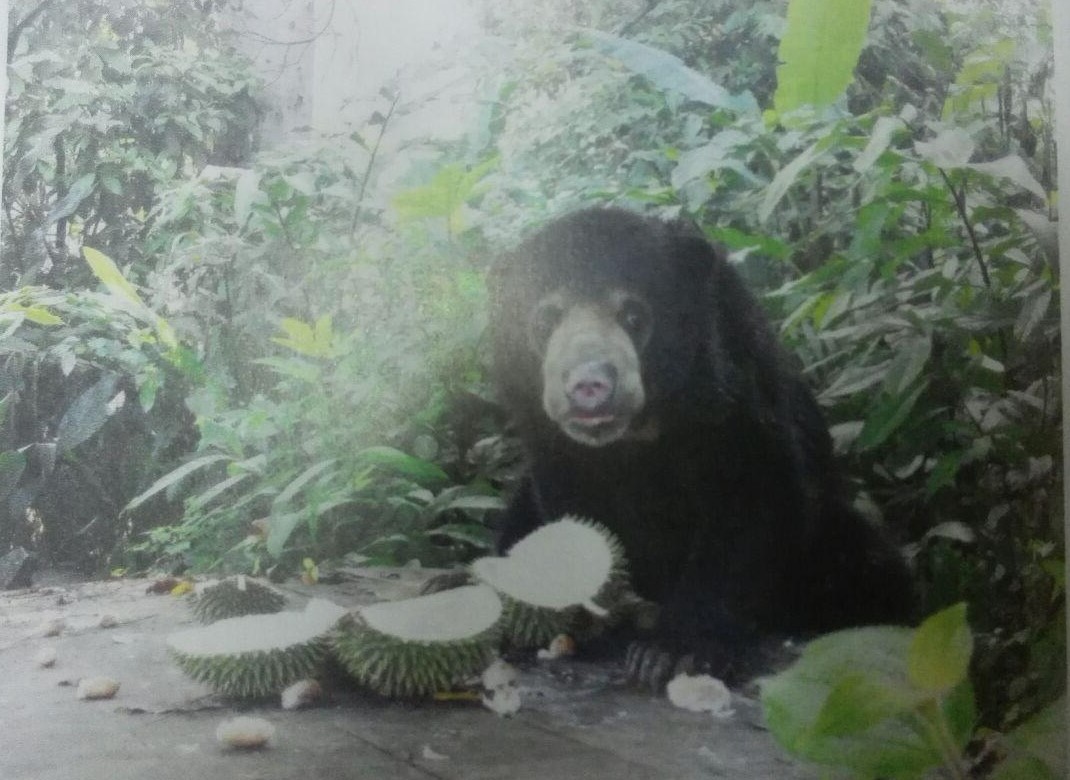
Kamaruddin, Z.A. & Shukor, M.N. of Universiti Kebangsaan Malaysia (UKM) on the use of telemetry system in the re-introduction programme of the Malayan sun bear
Picture
THE USE of telemetry tools in studying wildlife has proven to be effective in understanding movement, activity pattern, behaviour, and the way of life of an animal. This system has long been used in most countries and its manifold benefits are slowly gaining recognition and importance in Malaysia since the end of the 20th century.
      The purpose of telemetry is to determine the position of animals in the wild through detection of signal-collar (GPS devices) fixed on the animal before it is released. The system contains two important components, namely sending signal and the receiving signal. Like other electronic tools, telemetry has much evolved from archaic systems which only used radio waves into a more sophisticated set-up using satellite.
      In this study, three types of telemetry system were used i.e. radio frequency system, satellite system and cellular GPS system (GSM). (Note: The performance of telemetry tools largely depends on specification set up by the manufacturer. Telemetry used in this study is manufactured by Africa Wildlife Tracker.)
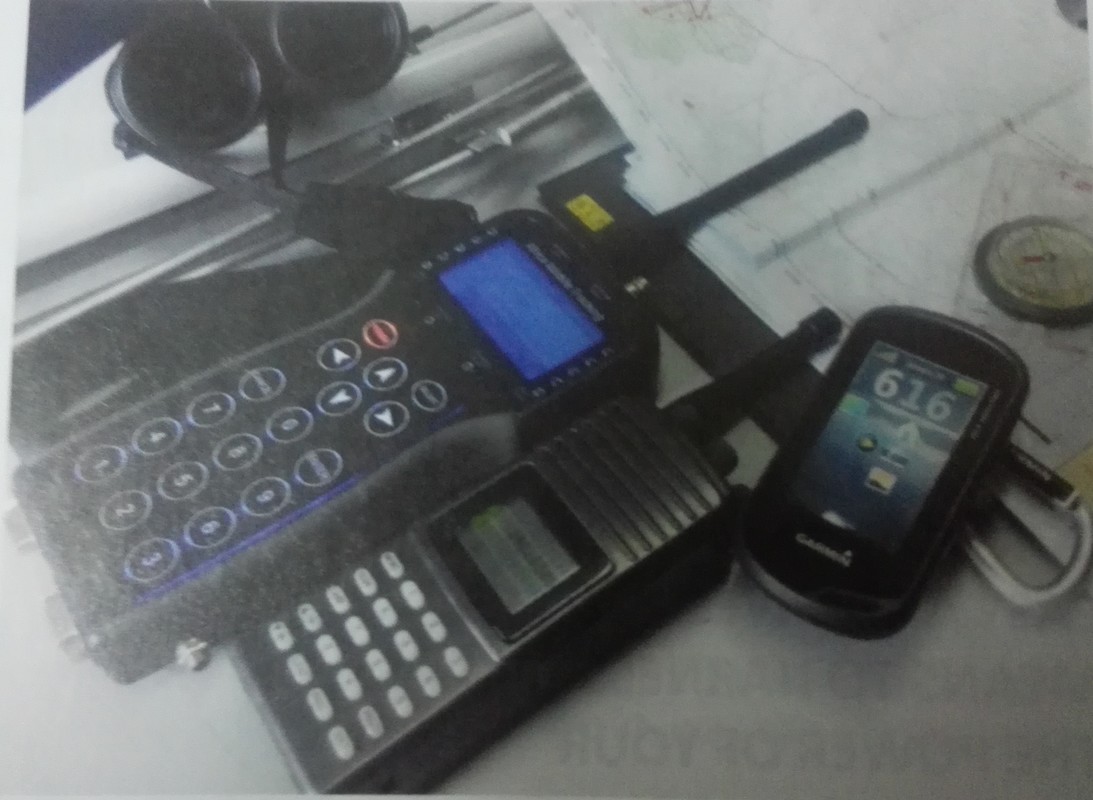
      In order to track the collared sun bears released in the wild, two types of radio frequencies were used: VHF (Very High Frequency) receiver and UHF (Ultra-High Frequency) receiver. These tools differ in terms of radio frequency ranges that are sent and received. VHF receivers work on waves ranging between 148Mhz-160Mhz whereas UHF receivers work at larger waves ranging between 433.5Mhz-433.92Mhz. All collars used in this study use both systems simultaneously with the exception of satellite and GSM collars. 
      The VHF device determines the direction of the waves sent by the collar. The ability to detect the direction depends on the distance between the VHF device and the collar, also taking into account the terrain of the area. If the wave transmissions are free from blockages like hills or thick forest canopies, the wave detection become more far reaching up to 7km and the signal received is used to change the collar’s settings in accordance to the information needed.
Picture
The data obtained from the collar contains historical and real position of the bears (coordinates), elevation, time, and speed of movement. In addition, the UHF device is also used to detect the position of the collar in a more detailed and accurate manner. The UHF’s capability to detect signals also depends on distance and terrain. However, its signal reception distance is very low, i.e. about 1-2km. Difference in function and capability of detecting signals between VHF and UHF will be used during tracking activities of released bears in the wild.
      The bear’s position in the wild can be specified through intersection of straight-lines of the signal direction from several different areas. This method is called Triangulation. Normally, VHF device will be used at the beginning of the method. When the distance to the target area becomes closer, the UHF device is used to download the data from the collar or to change the settings.
      The UHF device can function better within 100 metres radius of the bear’s location. Later, the information stored in the UHF memory will be uploaded into the AWT Software Tracker for further processing and analysis.
      All collars used in this study weigh around 700g, i.e. less than 5% of the sun bear’s body weight. It’s crucial to reduce the load as this will minimise the stress on these animals while adapting to their new home. The collar has a weak point that works to detach the strap after a certain time period.
      The detachment period depends on the area and weather conditions. If the strap is constantly exposed to weather changes (i.e. wet and dry) on a regular basis, the detachment occurs faster. It can also be exacerbated by attempts of the bears to remove the collar from their neck. Maximum durability of the weak point so far has been 6 months.
      The satellite collar is based on a mobile global two-way communication platform utilizing two-way data satellite communication complete with GPS systems. By connecting to the internet, historical data and near-to-real time positions of the animals can be accessed remotely, i.e. without leaving the office.
      The data can be programmed and changed using AWE TELEMETRY software. The Cellular collars consist of a Hawk105 (GPS-GSM) device that calculates the animal’s coordinates using a GPS. This data is then sent via the GSM network as a text message (SMS) that you can download from the internet using HAWK software.
      It is undisputable that these collars provide scientists a rare glimpse into the life of the bears that is much less invasive, and help us gain insights important to protecting these amazing creatures.

0 Comments

Colours of the wild

13/1/2017

0 Comments


MALAYSIAN NATURALIST, MARCH 2015

Picture
Alena Murang. All artwork featured here is the copyright of the artist.
ALENA MURANG took the usual education steps expected of any youth today. After finishing secondary school in Kuching, she went to the U.K. for her tertiary education, studying Management at the Manchester Business School, focusing on topics linked to environment and rural development, for example environmental sustainability, bridging the digital divide and ethical marketing and fair trade.
      Upon her return, Alena joined the corporate world with PricewaterhouseCoopers, as a management consultant on sustainability projects. After two years, however, she quit and went into a whole different line – art and music. The 25-year-old of mixed parentage – her father is a Kelabit from Sarawak and her mother is of English-Italian ancestry – expands on her decision to pursue her passion to conserve the environment and the traditions of her Kelabit people.
Doodling a career
Art and painting had been a hobby from when she was young, but about four years ago, Alena says, she realised she really loved art and needed to explore it to the fullest. “I had always doodled and painted as a child. I started taking it seriously in 2011, when a friend asked me to paint a picture of Slash from Guns N’ Roses for him. From there, the commissions started trickling in and I was painting alongside my full-time job at the time.

      “I realised I love painting so much, it’s one activity in which I can lose all sense of time, in which I have to focus my left and right brain, coordinate my sight and touch. It’s a very intense feeling. Painting also teaches me patience, resilience, observation and social awareness,” Alena says. Finally deciding to take the jump, she moved to Singapore to study art for a year at La Salle College of the Arts.
      Did she face doubters? “Yes!” she says with a laugh. The comments included, 'What are you going to do for money?', 'Why do you want to do this?' and 'After your art course you’re going back to the corporate world, right?' “I was like, no, I have faith in myself. I want to be a full-time artist.”

Picture
Wildlife on paper
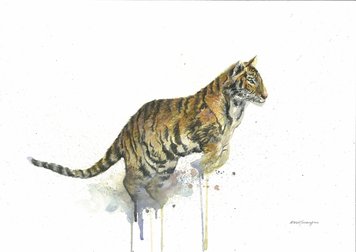
Working mainly in watercolour, Alena has a portfolio of wildlife art that has garnered wide interest. And her start was purely as a favour to her mother. “It began with an illustration to go alongside my mother’s Ph.D. research. She’s an anthropologist studying the history of the Kelabit longhouse through oral traditions, and part of her work involves collecting folklore.”

      Alena illustrated the yellow spiderhunter, which the Kelabits believe would bring luck or misfortune, depending on which way it crosses a person’s path; a cicada, also a harbinger of bad luck; and a civet cat. “I posted my work on Facebook and had such a good response,” she says. Orders started to come in, with people asking for specific animals, and she sold about 100 pieces. “I found it interesting how people took to animals. I also did plants, but did not get the same response.
      “And then I began to look at birds more closely, being inspired by the layers of the hairs of their feathers, and each piece is a different hue. My parents love birds and as a child I remember they would act as a tag team; on jungle walks, my mother would identify a bird by its English or Latin name and my dad would match it with its Kelabit or Malay name.”
      She shares that her love of wildlife seems very natural, once upon a time being a Malaysian Nature Society junior member and taken on family trips dolphin watching, visiting turtle islands to do conservation work and spending weekends jungle trekking. And although she hated jungle walks as a child, she and her elder brother now take time out of their hurly burly lives in Kuala Lumpur looking for forests to explore.


Spreading the message
Alena says survival as an artist is possible, although difficult. “I think any job is hard, but you know what is worth struggling for,” she says. “Fine artists are for social change, they work towards having a social impact, a social voice. I always think that art should have a purpose. For now at least, mine is to communicate the beauty of the natural environment and hopefully this can raise some awareness and education.”

      Most recently, the floods in Sarawak washed away four bridges near her village, meaning that residents could not get to their farms and other services. “I took my old wildlife sketches, uploaded them on Facebook and offered them for sale, with all the proceeds going to funds for new bridges,” she says.
"I always think that art should have a purpose. For now at least, mine is to communicate the beauty of the natural environment and hopefully this can raise some awareness and education." - Alena Murang
      This also highlights Alena’s strong ties to her land of birth, and her portfolio of tribal drawings and music are ways to highlight her heritage. Her father is from Long Peluan, six hours from the more famous Kelabit highlands of Bario. “People know Bario and Bario rice, but they don’t really know the Kelabit,” she says. Alena sings and plays the sape, and has appeared at music festivals to keep Kelabit traditions going and share them with the world. 
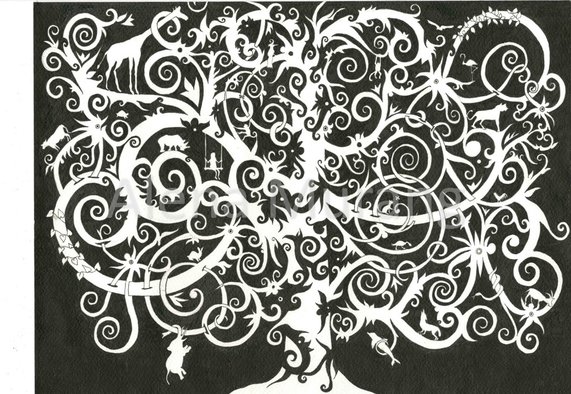
      “One of my favourite art pieces is the Tree of Life, based on traditional Orang Ulu design. Usually, it depicts hornbills at the top, close to the heavens, and crocodiles at bottom near the underworld, but I have put all types of animals, not just ones found here. And there’s me sitting in a swing. It’s more a search for identity, as I had just come back from England when I did it.”
       And where will Alena’s passion take her from here? Now, having just taken a job with the non-profit Teach for Malaysia, Alena wants to meld conservation with education. The NGO trains teachers for work in rural areas, and has incorporated conservation into the English syllabus, which she hopes will help spread the message of protecting Mother Nature. 
      Alongside it, she wants to alter humankind’s detrimental love of nature that drive people to keep wild animals as pets, sacrifice them for a taxidermy trophy or, in cases of tigers and bears, as rugs, by offering an alternative in the form of art. “I can sit and appreciate a live animal, on TV or in real life, and translate it into a painting,” she says, “and the animal is not sacrificed.” That may be all one conservationist can do, but it’s as good a step as any.
Picture
For more information on Alena, go to www.alenamurang.com or email her at [email protected]
0 Comments

earning our stripes

5/5/2016

0 Comments


malaysian naturalist, june 2015

Picture
Malaysia’s vanishing tigers would mean much more than just a physical loss; it could also herald the loss of our identity, writes the MNS Conservation Division
 
“Tyger, tyger burning bright, In the forests of the night; What immortal hand or eye, Could frame thy fearful symmetry?” Those are the opening lines of William Blake’s poem from 1794, deconstructed as a tribute to the fearsome characteristics of a beast that is easily identified by its black-and-orange striped markings.
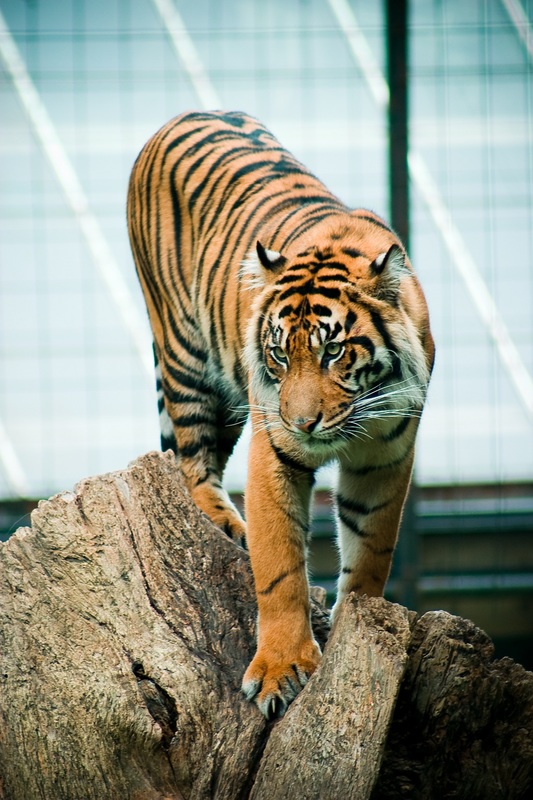
      Panthera tigris really needs no introduction. A solitary creature sociable only during the mating season and as a mother with cubs, the tiger is the “king of the jungle”, often cited as a symbol of strength and courage.
      There’s no clearer picture of this than here in Malaysia, which has as its national animal the Malayan tiger, or Panthera tigris jacksoni honouring famed tiger conservationist Peter Jackson, which is found only in the peninsula and southern Thailand.
      It is part of the country’s Coat of Arms, first introduced for the Federated Malay States in 1895 and in its current version since 1952. In that time, alterations were made in the number and visual representation of states as well as the number of points in the star above the crescent moon, but what remains unchanged are the two tigers, rampant.
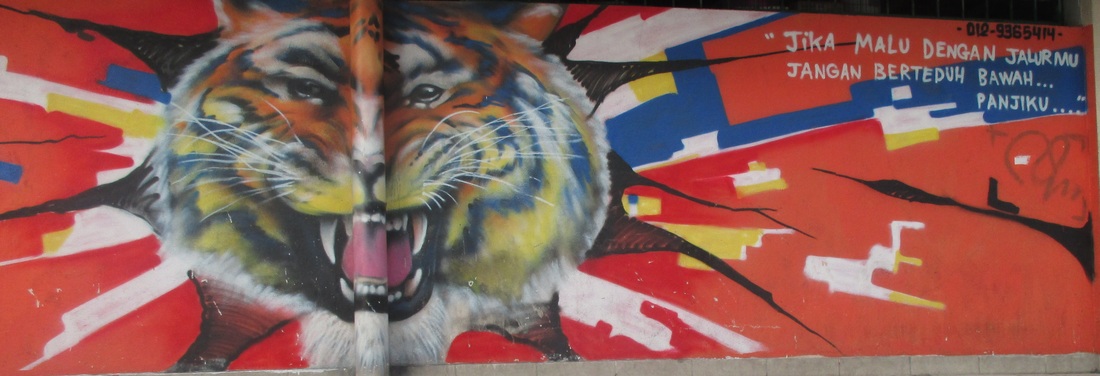
      We see the tiger in our everyday lives, too. It’s on the logo of homegrown major players Maybank and Proton; keepers of the law Malaysia Royal Police and Royal Customs Department; Universiti Sains Malaysia and Universiti Kebangsaan Malaysia in the education sector; Johor and its Southern Tigers; the Football Association of Malaysia and its Harimau Malaya and Harimau Muda squads, and in the official colours for our national team in the sporting arena.
      Its kingly characteristics also place the tiger in the realm of kings, historically hunted by the thousands by India’s rulers as a sign of prestige. Locally, the second Sultan of Johor (1873-1959) was renowned as a tiger hunter in his time, even immortalised in a television series, while the recently deceased ruler of the state was known to have kept tigers on palace grounds. The late Sultan of Perak, meanwhile, was the Royal Patron of WWF-Malaysia as well as the Malaysian Nature Society, with the former conservation organisation actively pursuing the protection of tigers and the latter indirectly involved through the MyCAT alliance.
      Legends also have it that rulers in the Malay Archipelago, particularly from Sumatera, channelled the tiger in more mystical ways, ranging from exhibiting the animal’s fierce and indomitable characteristics when fighting enemies to taking on its full form, as the werecat or weretiger, through supernatural means. There is also the belief that community leaders of yore had the power to call on the tiger to protect their farms and property.
      Back on terra firma, it is the psyche of the striped one that resonates with the Malaysian public. In the arena of local martial arts, there is Silat Gayong Harimau, Silat Cekak Harimau and Silat Harimau Minangkabau, among others, while other forms may feature moves (what is called “bunga”) as a conduit to the elegance and spirit of this beast. And, though in everyday life it may be frowned upon to become a “beast” when riled, it is the tiger’s courage and strength that are invoked time and again in sports through the fierce orange and black stripes worn proudly by our national teams and individual players. When it comes to facing our enemies on this battlefield, it’s more than encouraged to show our fangs and claws.
Picture
      Unfortunately, our fascination with the tiger will be meaningless if, as Malaysians, we do nothing to arrest the tragic decline of this species. The tiger may be the top predator in its habitat, but its hunting grounds have shrunk drastically in the past century, thanks to human development. Where in 1900 tigers ranged in Turkey and all areas of Asia, including the whole of India, large swathes of Russia as well as Bali and Java, the 1990 census estimated their territory to have shrunk to small portions of India, Russia, China and Asia (source: www.tigers-world.com).
      Furthermore, although Nature designed the garish orange and black stripes to blend seamlessly into the tiger’s chosen habitat, they prove no barrier to humankind’s greed, with poachers hunting the animal ruthlessly for proceeds from the sale of animal parts as status-enhancing tiger-skin rugs or for the supposed aphrodisiac properties of their organs, pushing all existing tiger sub-species into Endangered status.
      The prognosis for the Malayan tiger is even more dismal, with the numbers falling sharply from some 3,000 individuals in the 1950s to a crushing 300 today. WWF-Malaysia states that threats to Panthera tigris jacksoni come in the form of logging operations, conversion of land for agricultural purposes that cause human-animal conflict, poaching and the illegal wildlife trade.
      We can sit back and do nothing, and in our lifetime contribute to the decimation of this majestic animal. It won’t be long before we will only be able to view tigers through the bars of a cage in a zoo or, even worse, on the pages of natural history books.
       Conversely, what we can do is support organisations such as WWF-Malaysia and MyCAT in their conservation efforts, which range from mitigating the human-animal conflict, research and community outreach to organising volunteer poacher hunters to roam our jungles. And in doing so, truly earn the stripes we carry so boldly as symbols of the tiger’s courage and strength.

0 Comments
    Picture
    Be an MNS member and get e-copy of MN every quarter

    Malaysian naturalist

    From the archives of MNS's quarterly magazine

    posts


    Hornbill Helpers

    Collecting Nature Without Harming It

    Awestruck and Art-Struck

    Colours of The Wild

    In The Blink of a Firefly

    When Corals Fade

    Championing the Turtle

    Earning Our Stripes

    Categories

    All
    Art
    Birds
    Bugs
    Corals
    Education
    Firefly
    Gibbons
    Hornbill
    Insect
    Mammal
    Marine
    Photography
    Primates
    Reef
    Scuba Diving
    Sun Bear
    Tiger
    Turtles
    Volunteerism

Powered by Create your own unique website with customizable templates.